

When a fire breaks out in a building, every second counts. In the chaos and confusion of an emergency, people rely instinctively on visual cues to find their way to safety. Fire evacuation signs are not merely a regulatory formality, they are a fundamental pillar of any building’s safety strategy, capable of making the difference between an orderly evacuation and a tragic outcome.
Key takeaways
- Fire evacuation signs are essential safety tools that provide clear, instinctive guidance to occupants during emergency situations.
- Photoluminescent materials are highly recommended because they ensure signage remains visible even during power failures or in low-light conditions.
- Improper placement, such as signs mounted too high where smoke accumulates, can render emergency exits invisible during a fire.
- Strategic signage placement requires a thorough floor plan analysis to ensure directional cues are present at junctions, stairwells, and all potential exit points.
- Regular inspection and maintenance are vital to ensure signs are not damaged, faded, or obscured by temporary partitioning.
- Building managers should select specialized signage materials and configurations based on the specific environment, such as moisture-resistant signs for wet areas or low-level strips for large warehouses.
Why Fire Evacuation Signs Are a Critical Component of Building Safety
The Role of Clear Signage in Guiding Occupants During an Emergency
In a genuine emergency, smoke can quickly reduce visibility, panic can cloud judgement, and even familiar environments can feel disorienting. This is precisely why fire evacuation signs must be instantly recognisable and strategically positioned. Their purpose is to provide clear, unambiguous guidance without requiring occupants to think, a well-placed sign directs the eye and the body simultaneously, channelling people towards exits and away from danger.
Effective signage communicates through universally understood symbols and colours, ensuring that even visitors unfamiliar with the building layout can navigate safely. The use of photoluminescent materials is particularly valuable, as these signs continue to glow in conditions of poor lighting or power failure, precisely the circumstances most likely to occur during a serious fire incident.

How Poor Visibility or Absence of Signs Can Put Lives at Risk
A missing or obscured evacuation sign in a critical corridor is not a minor oversight, it is a genuine hazard. When occupants cannot locate an exit route swiftly, they may hesitate, double back, or follow others into danger. The consequences of such confusion can be severe, particularly in buildings with complex layouts such as hospitals, shopping centres, or multi-storey offices.
Signs that are faded, damaged, or positioned at an unhelpful height are equally problematic. Smoke tends to gather at ceiling level first, which means that signs mounted too high may become invisible precisely when they are most needed. Regular inspection and maintenance of all fire evacuation signage is therefore as important as the initial installation.
Strategic Placement of Fire Evacuation Signs: Best Practices for Every Building
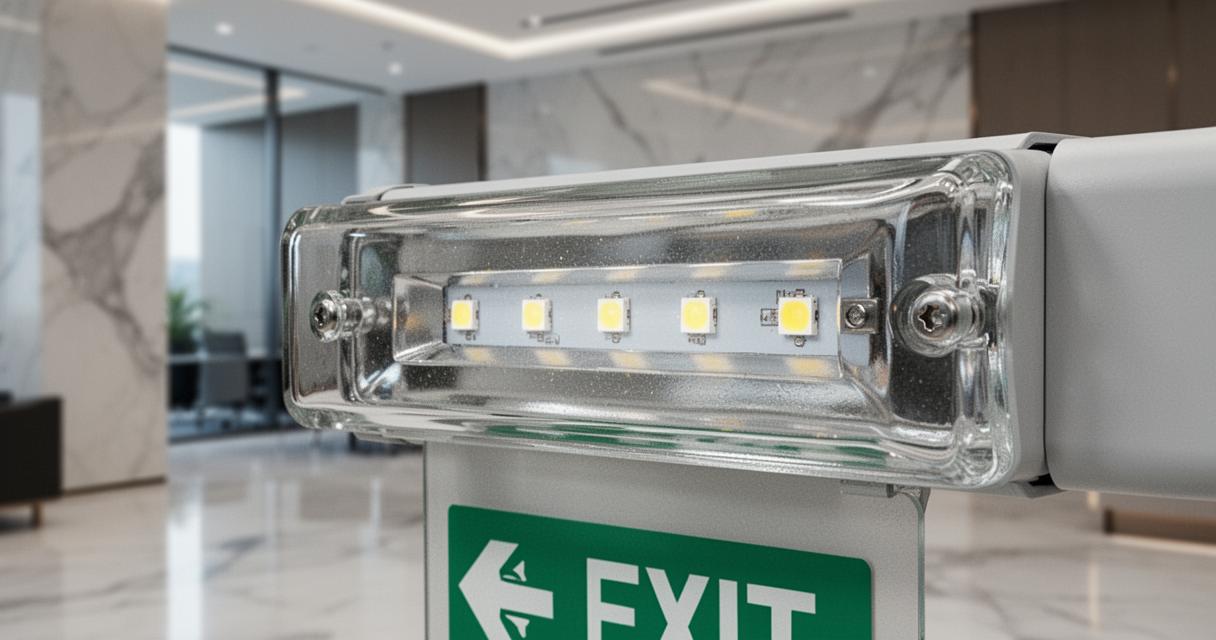
Key locations where evacuation signs must never be overlooked
Strategic placement begins with a thorough assessment of the building’s floor plan. Certain locations are non-negotiable when it comes to fire safety signage. Stairwells, corridor junctions, and any point where an occupant must choose between two directions all require clear directional signs. Exit doors themselves must be marked without ambiguity, and the route leading to each exit must be signposted consistently throughout.
Areas that are frequently overlooked include basement levels, storage rooms with multiple access points, and spaces where temporary partitioning may obscure existing signs. A comprehensive evacuation plan accounts for all of these zones, ensuring that no occupant (whether a regular member of staff or a first-time visitor) is ever left without guidance.
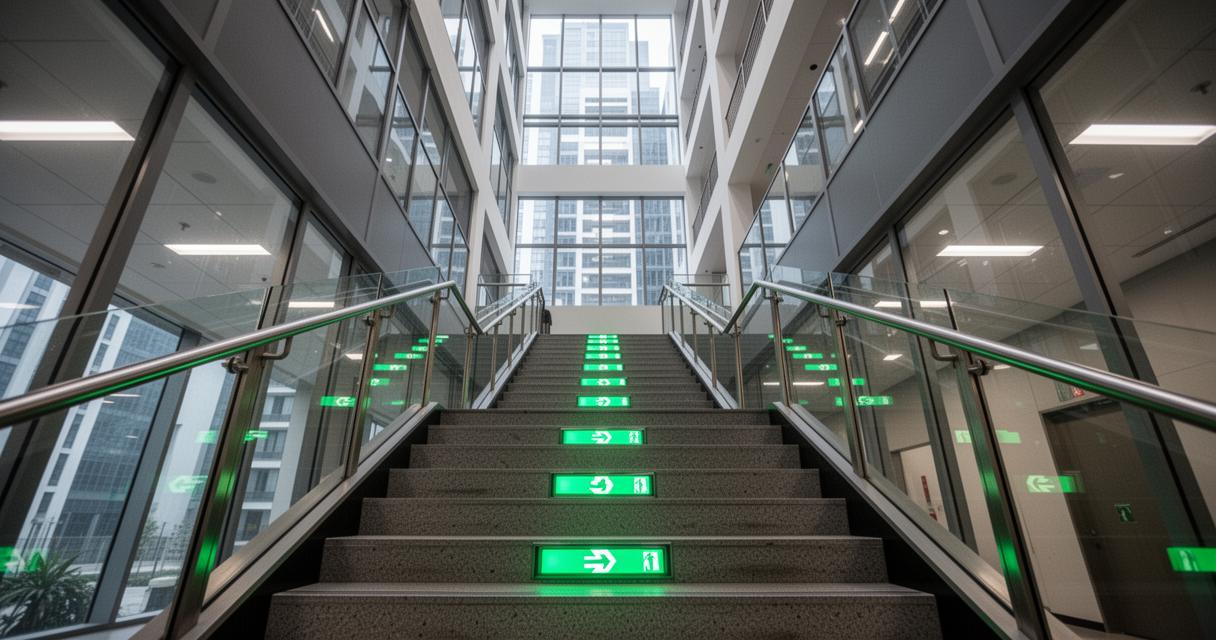
Choosing the Right Type of Sign for Different Building Environments
Not all environments call for the same solution. In a brightly lit open-plan office, standard illuminated exit signs may suffice. In a warehouse with high shelving or a venue with atmospheric low lighting, additional floor-level signage or photoluminescent strips along skirting boards can guide evacuees even when overhead signs are obscured.
Wet environments such as swimming pools or industrial kitchens require signs made from materials resistant to moisture and chemical exposure. Heritage buildings, meanwhile, may require bespoke solutions that respect the architectural character of the space whilst still meeting all safety requirements. The key principle remains consistent across all settings: every occupant must be able to identify the nearest evacuation route without delay, regardless of the conditions they encounter. Investing thoughtfully in the right signage for each specific environment is not merely best practice, it is a fundamental act of care for everyone who enters the building.