Construction sites represent environments where hazards abound, and the need for clear, immediate communication of safety information cannot be overstated. As we move into 2026, the importance of standardised safety signage has never been more critical. The ISO 7010 standard provides a comprehensive framework for safety signs that transcends language barriers and cultural differences, ensuring that workers, visitors, and contractors can instantly recognise and respond to potential dangers. This ranking explores the top five categories of ISO 7010 safety signs that are indispensable for construction sites, offering optimal security through universally understood graphical symbols and carefully designed visual communication.
| ISO 7010 Sign Category | Design Characteristics | Primary Purpose | Typical Applications | Key Benefits | Regulatory Compliance |
|---|---|---|---|---|---|
| Mandatory Signs | Blue circular design with white pictograms conforming to ISO 3864-1 and ISO 3864-3 principles | Communicate actions workers must take to ensure safety | PPE requirements (hard hats, safety footwear, high-visibility clothing), procedural mandates, hand washing, use of handrails | Transcends language barriers; constant reminders of non-negotiable protective measures; universally recognisable | Meets Health and Safety Regulations 1996 and BS EN ISO 7010:2020 requirements |
| Construction Site Signs | Various designs addressing excavation, lifting operations, overhead hazards; durable materials for harsh weather | Address unique hazards of building and civil engineering projects in dynamic environments | Excavation warnings, crane operation zones, confined space risks, scaffolding safety, overhead load warnings | Flexible yet consistent signage for evolving sites; comprehensive safety communication system; visibility from significant distances | Complies with BS EN ISO 7010:2020 following 2019 revision incorporating construction safety lessons |
| Workplace Safety Signs | Comprehensive system including prohibition, warning, mandatory, and safe condition signs; limited, well-designed pictograms | Communicate health and safety risks across diverse workplace types when other control measures are insufficient | Industrial facilities, public spaces, schools, hospitals, transport hubs; moving machinery, electrical risks, hazardous substances | Works across diverse workplace types; prevents confusion from overuse; harmonised across EU member states (effective 1 June 2015) | Legal framework established by Health and Safety Regulations 1996 (ISBN 978 0 7176 6598 3) |
| Health and Safety Signs | Systematic categorisation: red circular prohibition, yellow triangular warning, blue mandatory, green safe condition; 307-page specification document | Prevent accidents through hazard communication; fire protection and emergency response | Accident prevention, fire alarms, extinguishers, emergency escape routes, first aid facilities, electrical hazards, toxic substances | Single registered safety sign for each meaning eliminating confusion; supports UN Sustainable Development Goal 3; immediate comprehension without text | Published BS EN ISO 7010:2020+A6:2023 (ISBN 978 0 539 22713 0) effective 1 April 2020 |
| Warehouse Safety Signs | Specialised pictograms for forklift operations, materials handling, high-level storage; positioned for visibility in long aisles and variable lighting | Address unique challenges of vehicle movements, high-level storage, materials handling in congested areas | Forklift warning signs, falling load warnings, pedestrian walkways, storage system load limits, access control to high-level areas | Universal clarity for diverse linguistic backgrounds; supports worker mobility between facilities; prevents forklift-related serious injuries and fatalities | Meets ISO 7010 standards with careful consideration of operational characteristics and sight line obstructions |
| Custom Safety Signs | Site-specific designs using same colour coding and shape conventions as standard signs (red circular prohibition, yellow triangular warning, blue circular mandatory) | Supplement standard system for unique site-specific risks not covered by registered pictograms | Particular machine configurations, unique chemical storage, site-specific procedures, permit-to-work systems, specific emergency protocols | Addresses gaps in standard system whilst maintaining visual consistency; layered communication approach; tested with workforce for comprehension | Must complement ISO 7010 standard signs and follow ISO 3864-1 colour conventions; requires approval processes involving safety professionals |
Seton
When examining the landscape of safety signage suppliers in the United Kingdom, Seton emerges as a prominent provider of ISO 7010 compliant safety signs specifically tailored for construction environments. The company has built its reputation on delivering environment-specific signs that meet the rigorous standards set forth by the British Standards Institution, particularly the BS EN ISO 7010:2020 specification that came into effect on the first of April 2020. This standard, which replaced several earlier versions dating back to 2012, represents the culmination of international efforts to create a unified system of safety communication that serves accident prevention, fire protection, health hazard information, and emergency evacuation purposes across diverse settings.
Seton's comprehensive catalogue encompasses the full spectrum of ISO 7010 sign categories, including Prohibition Signs, Warning Signs, Mandatory Signs, Safe Condition Signs, Emergency Escape Signs, and Fire Safety Signs. These categories align precisely with the standardisation principles established by ISO subcommittee ISO TC 145 SC 2, which developed the framework to ensure universal clarity in safety communication. The supplier's commitment to optimal security is evident in their provision of signs designed according to ISO 3864-1 and ISO 3864-3 design principles, which govern the shapes, safety colours, and graphical symbol design that make these signs instantly recognisable. Construction site managers selecting Seton's products benefit from signage that can be scaled for reproduction and application whilst maintaining compliance with the Health and Safety Regulations 1996, ensuring that their sites meet legal requirements whilst protecting workers from occupational health and safety risks.
Comprehensive range for construction environments
Seton's offering extends beyond simple warning signs to encompass a complete safety communication system suitable for the complex requirements of construction sites. The range includes prohibition signs that clearly indicate actions that must not be taken, such as entry to restricted areas or the operation of equipment without authorisation. Warning signs alert workers to specific hazards they may encounter, from overhead loads to unstable ground conditions. Mandatory signs ensure that personal protective equipment is worn and that specific safety procedures are followed, whilst safe condition signs guide workers to emergency exits, first aid stations, and assembly points. This comprehensive approach reflects the understanding that construction sites require layered safety communication, where different types of information must be conveyed simultaneously to address the multiple risks present in such dynamic environments.
Compliance and international recognition
The ISO 7010 signs provided by Seton carry international recognition, having been developed through a rigorous process that involved collaboration between national standards bodies and safety experts worldwide. The standard's publication date of twenty-four March 2020, with an effective date of one April 2020, marked a significant milestone in workplace safety standardisation. These signs contribute directly to the United Nations Sustainable Development Goal 3, which focuses on health and well-being, by reducing accidents and injuries through clearer communication. For construction companies operating across multiple countries or employing international workers, this standardisation eliminates the confusion that can arise from different signage systems, ensuring that a prohibition sign in London conveys the same message as one in Tokyo or New York. The British Standards Institution's endorsement, through the publication of BS EN ISO 7010:2020+A6:2023 with ISBN 978 0 539 22713 0, provides additional assurance that these signs meet the highest standards of quality and effectiveness.
Mandatory signs
Mandatory signs represent one of the most critical categories within the ISO 7010 framework for construction site safety. These signs, characterised by their distinctive blue circular design with white pictograms, communicate actions that workers must take to ensure their safety and the safety of others. On construction sites, where the risk of injury from falling objects, machinery operation, and environmental hazards is ever-present, mandatory signs serve as constant reminders of the protective measures that are not optional but required. The standardisation achieved through ISO 7010 ensures that these signs are immediately recognisable regardless of the worker's native language or cultural background, a particularly important consideration given the increasingly international composition of construction workforces in the United Kingdom and across Europe.
The design principles underlying mandatory signs follow strict guidelines established in ISO 3864-1, which governs safety colours and safety signs. The blue colour has been selected specifically because it stands out in industrial environments whilst conveying a sense of instruction and necessity. The white graphical symbols are designed according to ISO 3864-3 principles, ensuring they are simple, clear, and unambiguous. Construction sites typically require a range of mandatory signs, including those that require the wearing of hard hats, safety footwear, high-visibility clothing, hearing protection, and respiratory protection. Each sign features a pictogram that has been carefully designed and tested to ensure universal comprehension, eliminating the need for text-based explanations that could be misunderstood or overlooked by workers who do not speak English as their first language.
Personal protective equipment requirements
Among the most commonly deployed mandatory signs on construction sites are those that specify personal protective equipment requirements. These signs are positioned at site entrances, in specific work zones where particular hazards are present, and near equipment that poses specific risks. The hard hat mandatory sign, for instance, is ubiquitous on construction sites, reflecting the constant risk of head injuries from falling objects, low clearances, and accidental contact with equipment. Similarly, safety footwear signs ensure that workers protect their feet from crushing injuries, puncture wounds, and slips. High-visibility clothing requirements are communicated through dedicated mandatory signs, particularly important in areas where vehicle movements occur or where workers might otherwise be difficult to see against the backdrop of construction materials and equipment. Hearing protection signs are deployed in areas where noise levels exceed safe thresholds, whilst respiratory protection signs indicate zones where dust, fumes, or other airborne hazards necessitate breathing apparatus. This layered approach to personal protective equipment signage ensures that workers are constantly reminded of the specific protections required in different areas of the construction site.
Procedural and behavioural mandates
Beyond personal protective equipment, mandatory signs on construction sites also communicate procedural requirements and behavioural expectations. These include signs that require workers to secure their tools, to report to supervisors before entering certain areas, to follow specific decontamination procedures when leaving hazardous zones, and to maintain clear access routes for emergency services. Hand washing signs ensure hygiene standards are maintained, particularly important in construction environments where workers may come into contact with hazardous substances. Signs mandating the use of handrails on stairs and walkways reduce the risk of falls, whilst those requiring equipment to be isolated before maintenance prevent accidental start-ups that could cause serious injuries. The effectiveness of these signs relies not only on their design and placement but also on the safety culture of the construction site, where compliance with mandatory instructions is understood to be non-negotiable. The ISO 7010 standard supports this culture by providing signs that are authoritative, clear, and consistent across all construction sites, reinforcing the message that certain actions are not suggestions but requirements that must be followed without exception.
Construction site signs
Construction site signs encompass a broad category of safety signage specifically designed to address the unique hazards and operational requirements of building and civil engineering projects. These signs must contend with environments that are constantly changing, where new hazards emerge as projects progress through different phases, and where a diverse range of activities occur simultaneously within relatively confined spaces. The ISO 7010 framework provides construction site managers with a standardised toolkit of graphical symbols that can be deployed to address everything from excavation hazards to crane operation zones, from confined space risks to scaffolding safety. The revision of the standard in 2019, which led to the publication of BS EN ISO 7010:2020, incorporated lessons learned from decades of construction site safety experience, ensuring that the signs address both traditional hazards and emerging risks associated with modern construction techniques and materials.
The application of ISO 7010 signs in construction environments reflects a comprehensive approach to risk prevention that recognises the dynamic nature of building sites. Unlike static workplaces such as offices or retail spaces, construction sites evolve daily, with new structures being erected, temporary systems being installed and removed, and different trades working in proximity to one another. This complexity necessitates a flexible yet consistent signage strategy, where warning signs, prohibition signs, mandatory signs, and safe condition signs work together to create a comprehensive safety communication system. Construction site signs must be durable enough to withstand harsh weather conditions, visible from significant distances, and positioned where they will be seen by workers approaching hazardous areas. The ISO 7010 standard addresses these practical considerations through specifications for sign materials, dimensions, and mounting arrangements, ensuring that signs remain effective throughout the life of the construction project.
Excavation and groundwork warnings
Excavation work presents some of the most significant hazards on construction sites, with risks including trench collapse, underground utility strikes, and falls into excavations. Warning signs compliant with ISO 7010 are essential for alerting workers and visitors to these dangers. The standard includes specific pictograms for deep excavations, unstable ground, and buried services, each designed to convey immediate recognition of the hazard. These signs are typically positioned at the perimeter of excavation zones, at access points, and along routes where workers might inadvertently approach dangerous areas. The graphical symbols are designed to be understood without text, showing simplified representations of falling figures, collapsing earth, or underground cables that instantly communicate the nature of the risk. Construction site managers combine these warning signs with prohibition signs that prevent unauthorised access to excavation areas and mandatory signs that require the use of specific safety equipment such as harnesses or detection devices. This layered approach, supported by the ISO 7010 framework, creates a comprehensive safety zone around excavation work, reducing the likelihood of the serious injuries and fatalities that have historically been associated with groundwork activities.
Lifting operations and overhead hazards
The presence of cranes, hoists, and other lifting equipment on construction sites creates hazards both from falling loads and from the movement of the lifting equipment itself. ISO 7010 provides specific warning signs for overhead loads, suspended loads, and crane operation zones, ensuring that workers are aware when they are in areas where falling objects could cause injury. These signs feature pictograms showing loads suspended from lifting hooks, with clear visual emphasis on the potential for objects to fall. Prohibition signs prevent workers from standing or walking beneath suspended loads, whilst mandatory signs require the wearing of hard hats in areas where overhead work is taking place. The placement of these signs requires careful consideration of sight lines and worker movement patterns, ensuring that individuals receive adequate warning before entering hazardous zones. Construction sites with multiple cranes or with particularly complex lifting operations may deploy additional signage indicating lift paths, assembly areas for loads, and banksman positions, creating a comprehensive communication system that supports safe lifting operations. The standardisation provided by ISO 7010 ensures that these signs are consistent across different construction sites, allowing workers who move between projects to immediately recognise and respond to lifting hazards.
Workplace safety signs
Workplace safety signs extend beyond construction-specific environments to encompass all locations where workers are present and where health and safety risks require communication. The ISO 7010 standard was developed with the understanding that effective safety communication must work across diverse workplace types, from industrial facilities and warehouses to hospitals, schools, and transport hubs. The guidance published by the Health and Safety Executive with ISBN 978 0 7176 6598 3 emphasises that safety signs are needed when there are significant health and safety risks despite other control measures. This principle recognises that signage is not a substitute for proper risk management but rather a crucial component of a comprehensive safety strategy that includes engineering controls, administrative procedures, and personal protective equipment.
The Health and Safety Regulations 1996, which came into effect on the first of June 2015, established the legal framework for safety signs and signals in UK workplaces. This legislation aimed to harmonise safety signs across European Union member states, ensuring that workers moving between countries would encounter consistent safety communication. The regulations specify that signs must be clear and legible, indicating prohibited actions, necessary safeguards, hazards, and directions to exits or first aid facilities. Importantly, the guidance cautions against the overuse of signage, noting that too many signs can lead to confusion and reduce the effectiveness of critical safety messages. This principle is particularly relevant in complex workplaces where multiple hazards exist, requiring careful consideration of which risks require signage and where signs should be positioned for maximum effectiveness. The ISO 7010 standard supports this approach by providing a limited set of well-designed pictograms that have been tested for comprehension and effectiveness, rather than allowing an unlimited proliferation of different sign designs that could dilute safety messages.
Industrial facility applications
Industrial facilities represent one of the primary application areas for ISO 7010 workplace safety signs, encompassing manufacturing plants, processing facilities, power generation sites, and chemical plants. These environments present a complex array of hazards, including moving machinery, high temperatures, pressurised systems, electrical risks, and hazardous substances. The comprehensive nature of the ISO 7010 standard ensures that appropriate signs are available for each of these hazards, with warning signs alerting workers to specific dangers, prohibition signs preventing unsafe actions, mandatory signs requiring protective measures, and safe condition signs guiding workers to emergency exits and safety equipment. In industrial settings, the positioning of signs requires particular attention to ensure they are visible from relevant work positions and approach routes, whilst not being obscured by equipment, pipework, or stored materials. The durability of signs is also critical in these environments, where exposure to chemicals, heat, moisture, and physical impact can degrade signage that does not meet appropriate standards. The ISO 7010 framework addresses these practical considerations through specifications for sign materials and construction, ensuring that workplace safety signs maintain their effectiveness throughout their service life.
Public space and multi-use environment signage
The application of ISO 7010 signs extends to public spaces and multi-use environments, including schools, hospitals, transport hubs, and commercial premises. In these settings, the need for universal clarity becomes even more pronounced, as the population encountering the signs is more diverse and may include individuals with limited familiarity with safety signage conventions. The graphical symbols specified in ISO 7010 address this challenge by using pictograms that are designed for immediate comprehension without requiring text or prior training. Emergency escape signs, which direct people to exits and assembly points, are particularly critical in public spaces where evacuation may be necessary in fire or other emergency situations. Fire safety signs indicate the locations of fire alarms, extinguishers, and firefighting equipment, ensuring that both trained staff and members of the public can respond effectively to fire emergencies. First aid signs guide people to medical assistance points, whilst prohibition signs prevent actions that could endanger others, such as smoking in prohibited areas or the use of lifts during fires. The standardisation achieved through ISO 7010 ensures that these signs work effectively across different types of public spaces, contributing to the overall safety of workplaces, schools, hospitals, and transport facilities throughout the United Kingdom and internationally.
Health and safety signs
Health and safety signs represent a fundamental component of workplace risk management, serving to communicate hazards, prescribe protective actions, and guide individuals to safety in emergency situations. The ISO 7010 standard addresses the full spectrum of health and safety communication needs through its classification of signs into distinct categories based on their function and the type of information they convey. Prohibition signs communicate actions that must not be taken, using red circular designs with diagonal bars to create instantly recognisable symbols that transcend language barriers. Warning signs alert individuals to hazards, using yellow triangular designs with black pictograms that have been carefully developed to represent specific dangers. Mandatory signs prescribe actions that must be taken, whilst safe condition signs provide information about emergency exits, first aid facilities, and other safety resources. This systematic approach to sign categorisation ensures that individuals can quickly understand the type of information being conveyed based on the sign's shape and colour, even before they have processed the specific pictogram.
The development of ISO 7010 was driven by the recognition that inconsistent safety signage could lead to confusion and accidents, particularly in environments where workers from different countries and cultural backgrounds work together. Mr Jan-Bernd Stell, in emphasising the need for standardisation, highlighted how different sign designs for the same hazard or instruction could result in delayed comprehension or misunderstanding, with potentially serious consequences. The standard addresses this issue by providing a single, registered safety sign for each meaning, eliminating the proliferation of different designs that characterised safety signage before international standardisation efforts. The document, which extends to 307 pages, specifies not only the pictograms themselves but also the design rules for their application, including specifications for safety colours, dimensions, and reproduction methods. This level of detail ensures that signs produced by different manufacturers and used in different countries maintain consistency, supporting the goal of universal clarity in safety communication.
Accident prevention and hazard communication
The primary purpose of health and safety signs is to prevent accidents and injuries by providing timely information about hazards and the actions needed to avoid them. Warning signs play a crucial role in this function, alerting individuals to dangers such as electrical hazards, toxic substances, hot surfaces, slippery floors, and moving machinery. The ISO 7010 standard includes registered safety signs for a comprehensive range of hazards, each featuring a carefully designed pictogram that represents the specific danger in a simplified, easily recognised form. These warning signs are typically positioned at points where individuals are about to encounter a hazard, providing sufficient advance notice to allow them to take appropriate precautions. The effectiveness of warning signs depends not only on their design but also on appropriate placement, adequate lighting, and maintenance to ensure they remain visible and legible throughout their service life. Construction sites, industrial facilities, and other high-hazard environments typically deploy extensive arrays of warning signs, creating multiple layers of communication that reinforce safety messages and ensure that workers remain alert to the risks they face.
Fire protection and emergency response
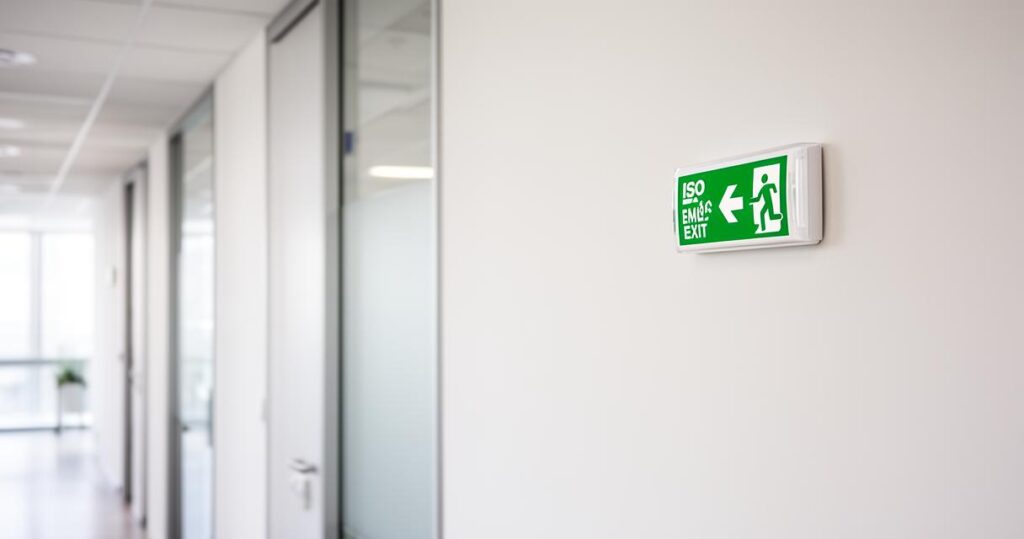
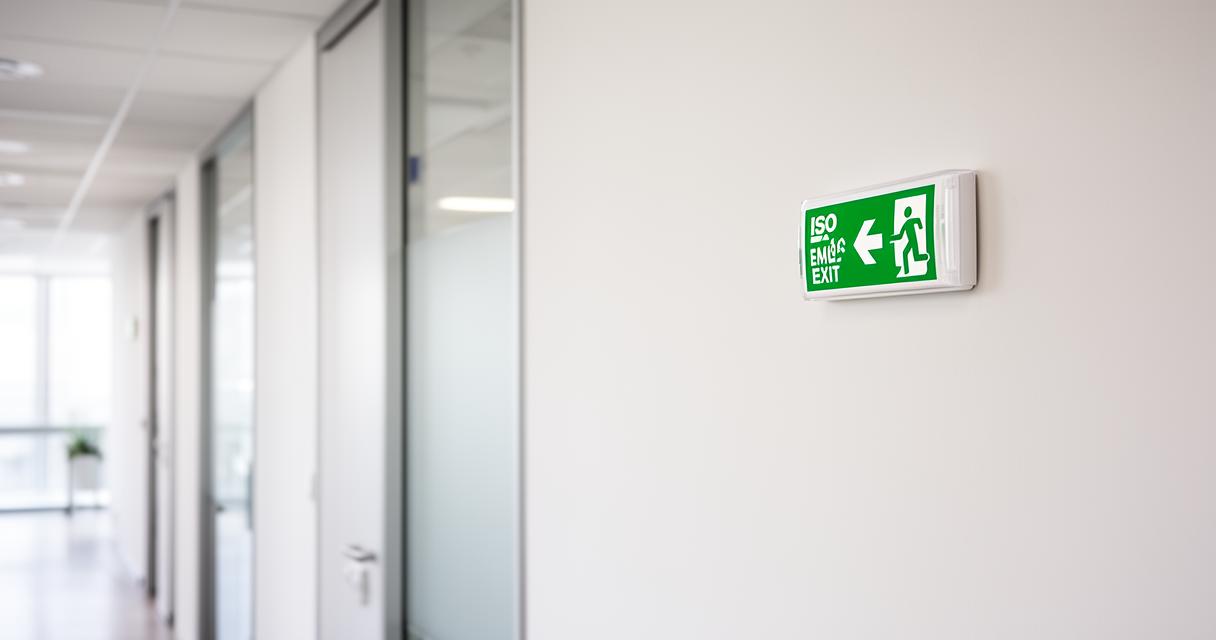
Fire safety signs and emergency escape signs represent critical subsets of health and safety signage, addressing situations where rapid, correct action can mean the difference between life and death. The ISO 7010 standard includes specific signs for fire alarms, fire extinguishers, fire blankets, hose reels, and other firefighting equipment, ensuring that these resources can be quickly located in emergency situations. The signs use green or red backgrounds with white pictograms, depending on whether they are indicating safety equipment or fire-specific resources. Emergency escape signs guide individuals to exits, down stairs, and to assembly points, using running figure pictograms that are universally understood. The standard includes variations for different directions and configurations, allowing comprehensive evacuation route marking. These signs must comply with specific requirements for visibility and illumination, ensuring they remain effective even when normal lighting fails. The guidance emphasises that evacuation plans should incorporate these standardised signs, creating a coherent system that supports rapid escape from buildings and facilities in fire or other emergency situations. The prohibition sign warning against the use of lifts during fires represents another critical element of emergency response signage, preventing actions that could trap individuals in dangerous situations.
Warehouse safety signs
Warehouses and distribution centres present unique safety challenges that require specialised application of ISO 7010 safety signs. These facilities combine the hazards of industrial environments with the additional complexities of vehicle movements, high-level storage systems, materials handling equipment, and frequently congested work areas where pedestrians and machinery operate in close proximity. The comprehensive range of signs available under the ISO 7010 standard addresses each of these hazards, providing warehouse managers with the tools needed to create safe working environments. Warning signs alert workers to hazards such as forklift truck movements, overhead loads, unstable stacks, and confined spaces. Prohibition signs prevent unsafe actions, including entry to restricted areas, unauthorised operation of equipment, and actions that could destabilise stored materials. Mandatory signs ensure that personal protective equipment is worn and that safe working procedures are followed, whilst safe condition signs guide workers to emergency exits, first aid stations, and safety equipment.
The application of safety signs in warehouse environments requires careful consideration of the specific operational characteristics of these facilities. Warehouses typically feature long aisles, high storage racks that can obstruct sight lines, and variable lighting conditions that can affect sign visibility. Signs must therefore be positioned to ensure they are visible from relevant approach routes and work positions, often requiring multiple signs to cover different sight lines. The movement of goods and equipment within warehouses means that temporary obstructions can arise, necessitating regular checks to ensure signs remain visible. Additionally, the international nature of logistics operations means that warehouse workers may come from diverse linguistic and cultural backgrounds, making the universal clarity provided by ISO 7010 pictograms particularly valuable. The standardisation of safety signs across different warehouse facilities also supports worker mobility, allowing individuals to move between different employers and locations whilst encountering consistent safety communication.
Materials handling and forklift operations
The operation of forklift trucks and other materials handling equipment represents one of the most significant hazards in warehouse environments, responsible for numerous serious injuries and fatalities each year. ISO 7010 provides specific warning signs for forklift operations, featuring pictograms that clearly depict these vehicles and the hazards they present. These signs are typically positioned at intersections, blind corners, and areas where forklifts and pedestrians share space, providing advance warning that allows individuals to take appropriate precautions. Prohibition signs prevent pedestrians from entering forklift operating areas, whilst mandatory signs require the use of designated walkways and the wearing of high-visibility clothing. The effectiveness of these signs is enhanced when they are integrated into a comprehensive traffic management system that includes physical segregation, speed limits, and operational procedures. Warning signs for falling loads and overhead hazards are particularly important in warehouse environments where materials are routinely moved at height, whilst signs indicating load limits and stacking restrictions help prevent the collapse of stored goods that could cause serious injuries.
Storage system hazards and access control
High-level storage systems, including pallet racking, mezzanine floors, and automated storage and retrieval systems, create specific hazards that require dedicated safety signage. Warning signs alert workers to risks associated with working at height, unstable loads, and the potential for rack collapse if systems are overloaded or damaged. Mandatory signs require inspection of racking before use, proper securing of loads, and the use of appropriate equipment for accessing stored materials. Prohibition signs prevent climbing on racking, overloading of shelves, and unauthorised access to high-level storage areas. Safe condition signs indicate the locations of ladders, access platforms, and fall protection equipment, ensuring that workers have the information needed to access stored materials safely. The ISO 7010 standard provides pictograms for each of these applications, supporting comprehensive safety communication in warehouse environments. Additionally, signs indicating safe working load limits for storage systems and lifting equipment provide critical information that prevents structural failures and equipment breakdowns that could result in catastrophic accidents.
Custom safety signs
Whilst the ISO 7010 standard provides a comprehensive library of registered safety signs covering a wide range of hazards and situations, there are occasions when workplaces require signs that address site-specific risks or provide information that is not covered by standard pictograms. Custom safety signs allow organisations to supplement the standardised sign system with additional communication that addresses unique circumstances whilst maintaining consistency with the overall safety signage strategy. The design of custom signs requires careful consideration to ensure they do not conflict with or dilute the messages conveyed by ISO 7010 standard signs. Best practice involves using the same colour coding and shape conventions as the standard signs, so that custom prohibition signs use red circular designs, custom warning signs use yellow triangular designs, and custom mandatory signs use blue circular designs. This approach ensures that individuals can immediately recognise the type of message being conveyed based on the sign's appearance, even when the specific pictogram is not one they have encountered before.
The Health and Safety Executive guidance emphasises that safety signs should be used to supplement other risk control measures rather than as a substitute for proper hazard elimination or reduction. This principle is particularly relevant when considering custom signs, which should only be deployed when there is a clear need to communicate information that is not adequately covered by standard signage and where other control measures are not sufficient to manage the risk. Examples of situations where custom signs may be appropriate include site-specific hazards such as particular machine configurations, unique chemical storage arrangements, or access routes that do not fit standard patterns. Custom signs may also be needed to communicate procedural requirements specific to a particular workplace, such as reporting protocols, permit-to-work systems, or specific emergency response procedures. The design and implementation of custom signs should involve consultation with workers and safety representatives to ensure the signs effectively communicate the intended message and are positioned where they will be most effective.
Integration with standard sign systems
When custom safety signs are required, it is essential to integrate them seamlessly with the ISO 7010 standard sign system to maintain overall coherence and effectiveness. This integration involves several key considerations. Firstly, custom signs should use the same design principles as standard signs, including the use of safety colours as specified in ISO 3864-1 and graphical symbols that follow the design guidelines of ISO 3864-3. This ensures visual consistency that supports rapid comprehension. Secondly, custom signs should complement rather than duplicate standard signs, addressing gaps in the standard system rather than creating alternative representations of hazards or instructions already covered by registered safety signs. Thirdly, custom signs should be positioned in relation to standard signs in a way that creates a logical flow of information, with general hazard warnings provided by standard signs supplemented by specific details or instructions provided by custom signs. This layered approach to safety communication ensures that the most critical, universal messages are conveyed through standardised pictograms that benefit from widespread recognition, whilst site-specific details are communicated through custom signs that workers learn to recognise through familiarity with their particular workplace.
Design considerations and approval processes
The creation of effective custom safety signs requires careful attention to design principles that ensure clarity, visibility, and comprehension. Pictograms should be simple and unambiguous, avoiding unnecessary detail that could create confusion or slow recognition. Colours should conform to the safety colour conventions established in ISO 3864-1, with red used for prohibition, yellow for warning, blue for mandatory actions, and green for safe conditions or emergency information. Text, if used, should be minimal and in clear, easily readable fonts, recognising that the primary communication should be through the pictogram rather than written language. Before deploying custom signs, organisations should test them with representative samples of the workforce to ensure they are understood as intended and do not create confusion or conflict with other safety messages. Approval processes should involve safety professionals, supervisors, and worker representatives, ensuring that custom signs meet genuine needs and are appropriately designed. Documentation of custom signs, including their meaning, intended locations, and the rationale for their use, supports consistent application and provides reference information for new workers or contractors who may encounter them.
Safety sign regulations uk
The regulatory framework governing safety signs in the United Kingdom is primarily established through the Health and Safety Safety Signs and Signals Regulations 1996, which implemented European Union directives aimed at harmonising safety signage across member states. These regulations, as updated through subsequent amendments, establish legal requirements for the provision and use of safety signs in workplaces and public spaces where significant health and safety risks exist. The regulations specify that employers and dutyholders are responsible for ensuring that appropriate safety signs are provided wherever they are necessary to protect health and safety, supplementing other risk control measures. This legal requirement recognises that safety signs are not optional decorations but essential components of workplace safety management, with potential criminal and civil liability consequences for organisations that fail to provide adequate signage. The regulations work in conjunction with other health and safety legislation, including the Health and Safety at Work etc Act 1974 and the Management of Health and Safety at Work Regulations 1999, creating a comprehensive legal framework that places clear responsibilities on employers to identify risks, implement controls, and communicate effectively with workers.
The adoption of the BS EN ISO 7010:2020+A6:2023 standard by the British Standards Institution provides a recognised means of complying with the legal requirements for safety signage. Whilst the regulations do not explicitly mandate the use of ISO 7010 signs, the standard represents best practice and is increasingly being adopted across UK workplaces as older sign designs are replaced. The latest amendment, published on the thirtieth of April 2023, incorporated three recent amendments that introduced new symbols for fire zones, tornado zones, and other hazards, ensuring the standard remains current with emerging risks and evolving understanding of effective safety communication. Organisations that adopt ISO 7010 signs benefit from the assurance that their signage meets internationally recognised standards and has been tested for effectiveness. The standard also provides a defence against potential liability, demonstrating that appropriate steps have been taken to provide clear, comprehensible safety information. For manufacturers of signs, fire safety services, health and safety assessors, public space managers, and event planners, the ISO 7010 standard provides clear specifications that eliminate ambiguity about sign design and application.
Compliance requirements and inspection
Compliance with safety sign regulations involves several key requirements that organisations must fulfil. Firstly, there must be a systematic assessment of the workplace to identify where safety signs are needed, based on the risks present and the adequacy of other control measures. This assessment should consider all areas of the workplace, including production areas, storage facilities, access routes, and support spaces such as rest rooms and changing areas. Secondly, appropriate signs must be selected and installed in locations where they will be visible to those who need to see them, with consideration given to sight lines, lighting conditions, and potential obstructions. Thirdly, signs must be maintained in good condition, with regular inspections to identify and address fading, damage, or obscuration. Fourthly, workers must be provided with information about the meaning of safety signs, particularly where custom or specialised signs are used. This information should form part of induction training for new workers and refresher training for existing staff. Finally, the effectiveness of safety signage should be reviewed periodically, with adjustments made as workplace conditions change or as experience reveals that signs are not achieving their intended purpose.
Future developments and international harmonisation
The evolution of safety sign standards continues, with ongoing work to expand the range of registered safety signs under ISO 7010 and to improve the effectiveness of existing pictograms based on research and user feedback. The publication of corrected versions and amendments to the standard reflects this continuous improvement process, ensuring that safety signage keeps pace with technological changes, emerging hazards, and advances in understanding of human perception and cognition. International harmonisation efforts, led by the International Organization for Standardization through its technical committee ISO TC 145 SC 2, continue to work towards greater consistency in safety signage worldwide. This harmonisation supports the globalisation of business operations, international labour mobility, and tourism, ensuring that safety signs provide effective communication regardless of where they are encountered. The alignment of UK regulations with international standards, despite changes in the relationship with the European Union, reflects recognition that safety is a universal concern that transcends political boundaries and that the benefits of standardised, internationally recognised safety signage are too significant to compromise through isolated national approaches. As we move further into 2026, the continued adoption and implementation of ISO 7010 safety signs represents a commitment to optimal security through clear, universal communication that protects workers and the public from harm.